
How AI Is Changing the Recruiting Process in 2026
Discover how AI is transforming recruitment in 2026. Learn why skill gaps not AI drive hiring decisions and how Talsy.ai enables smarter, fairer hiring.
Recruiting Process in 2026
As we step into 2026, AI in recruitment has moved from an optional experiment to a core hiring engine for modern organizations. From resume screening to interview scheduling, AI is now embedded into almost every stage of the recruiting process.
However, this rapid adoption has created frustration among candidates, especially around the idea of “AI recruiters rejecting humans.”
The reality is different.
The real issue is not recruiter bias or AI unfairness it is a growing skill mismatch between evolving job requirements and available talent.
Companies today are no longer hiring for single-skill roles.They need multi-skilled, adaptable, and job-ready candidates who can thrive in dynamic environments.
TL;DR/At-a-Glance Summary
What Is AI-Driven Recruiting?
AI-driven recruiting refers to the use of artificial intelligence and automation to improve hiring efficiency, accuracy, and fairness.
Meaning of AI in Recruitment
AI in recruitment uses machine learning, data analytics, and automation to help recruiters screen, evaluate, match, and manage candidates more effectively.
Where AI Is Used in Recruitment
- Resume screening
- Candidate matching
- Interview scheduling
- Skill assessments
- Hiring analytics & reports

Why Companies Are Adopting AI in Recruitment
The adoption of AI in hiring is driven by business reality, not trends.
1. Application Overload
Companies receive 250+ applications per job on average, making manual screening impossible at scale.
2. Faster Hiring Demands
In competitive markets, top candidates exit the pipeline within 10–15 days if hiring is slow.
3. Data-Backed Decisions
AI enables objective evaluation, reducing guesswork and improving quality of hire.
4. Rise of Hybrid Roles
Modern roles now demand technical + analytical + communication skills in a single profile.
How AI Is Changing the Recruiting Process
From Resume-Based Hiring to Skill-Based Hiring
AI shifts focus from degrees and job titles to actual competencies, experience depth, and job readiness.
From One-Skill Roles to Multi-Skill Expectations
Today’s recruiter expects candidates to combine:
- Core domain skills
- Analytical thinking
- Collaboration & communication
AI reflects company requirements it doesn’t create them.
From Manual Processes to Automated Workflows
AI automates:
- Screening
- Interview coordination
- Candidate tracking
Recruiters now spend more time on human conversations, not administrative tasks.
The Real Problem: Skill Gap, Not AI Recruiters
Candidates often feel rejected by “machines.”
But the truth is:
- Companies are evolving faster than candidate upskilling
- AI identifies skill gaps earlier in the hiring funnel
- Recruiters don’t reject candidates requirements do

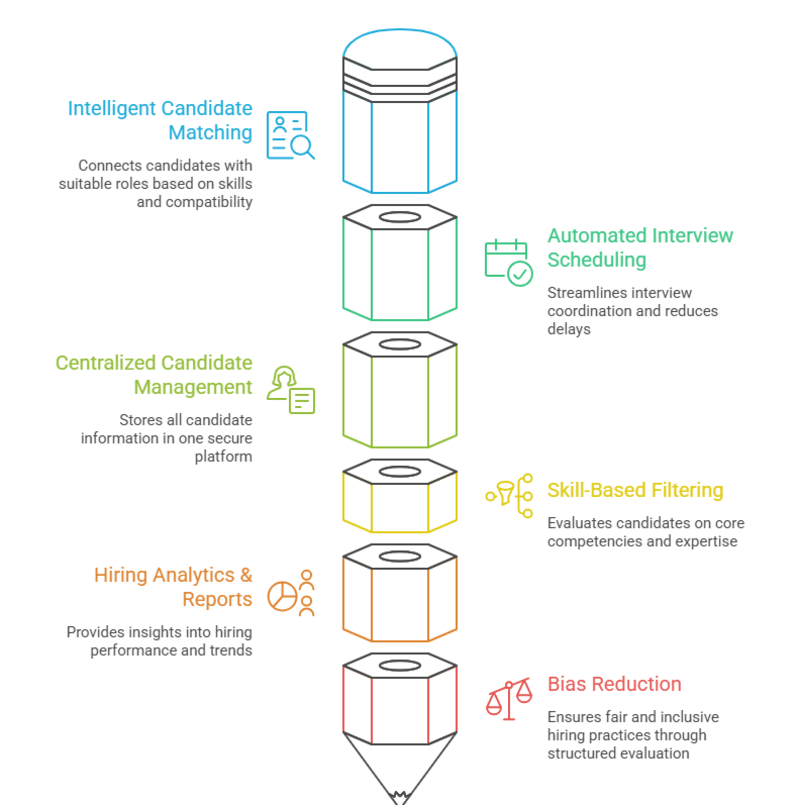
Key Features of AI-Powered Recruiting Platforms
Intelligent Candidate Matching
AI-powered candidate matching analyzes skills, experience, job readiness, and role compatibility to connect the right candidates with the right roles. Unlike keyword-based screening, intelligent matching improves quality of hire, recruiter efficiency, and talent relevance.
Automated Interview Scheduling
Automated interview scheduling uses AI to coordinate candidate availability, recruiter calendars, and interview panels in real time. This reduces time-to-hire, scheduling delays, and candidate drop-offs, creating a faster and smoother hiring experience.
Centralized Candidate Management
A centralized candidate management system stores candidate profiles, resumes, interview feedback, and hiring history in one secure platform. Recruiters gain complete visibility across pipelines, improving collaboration, tracking, and recruitment workflow efficiency.
Skill-Based Filtering
Skill-based filtering evaluates candidates on core competencies, practical expertise, and job-specific skills instead of resumes alone. This enables fairer screening, better role alignment, and future-ready hiring decisions in AI-driven recruitment.
Hiring Analytics & Reports
Hiring analytics provide real-time insights into hiring performance, time-to-fill, quality of hire, and source effectiveness. Data-driven recruitment reports help companies optimize hiring strategies, reduce costs, and scale recruitment efficiently.
Bias Reduction Through Structured Evaluation
Structured AI evaluation applies consistent scoring models and standardized criteria across all candidates. This reduces unconscious bias and supports fair, inclusive, and compliant hiring practices while maintaining human oversight.
Challenges in AI-Based Hiring
- Candidate fear of automation arises from the misconception that AI replaces human recruiters, creating anxiety about fairness, job security, and lack of human judgment in hiring decisions.
- Misunderstanding AI evaluation logic leads candidates to believe they are rejected randomly, when in reality AI recruitment systems assess skills, experience relevance, and job readiness based on structured criteria.
- Poor-quality data leading to mismatches occurs when outdated resumes, incomplete profiles, or inaccurate job descriptions reduce the effectiveness of AI-powered candidate matching .
- Over-automation without human touch can negatively impact candidate experience if recruiters rely solely on automation instead of balancing AI efficiency with meaningful human interaction.
- Resistance to continuous upskilling prevents candidates from meeting evolving role requirements, even as AI hiring platforms increasingly prioritize multi-skilled, adaptable talent.
How Talsy.ai Solves These Challenges
- Human + AI Balanced Hiring: AI assists recruiters humans make final decisions.
- Skill-Centric Candidate Evaluation: Candidates are matched based on job readiness, not resume formatting.
- Transparent & Structured Hiring Workflows: Clear stages improve candidate trust and experience.
- Smarter Interview Scheduling & Tracking: Faster coordination reduces candidate drop-offs by up to 40%
Benefits of Using Talsy.ai for Recruitment
AI-powered recruitment delivers faster hiring cycles by automating screening, matching, and interview scheduling, enabling teams to close roles quicker without compromising quality. It ensures better skill-to-role matching through skill-based evaluation, while reducing recruiter workload by eliminating repetitive manual tasks. At the same time, candidates benefit from a more transparent and engaging journey, leading to an improved candidate experience. With data-driven hiring decisions backed by real-time analytics and reports, organizations can continuously optimize outcomes and support scalable recruitment operations as hiring demands grow.

Use Cases of AI Recruiting with Talsy.ai
- High-volume hiring benefits from AI-powered recruitment by automating resume screening, candidate shortlisting, and interview scheduling.
- Skill-based tech recruitment uses AI-driven skill matching and assessments to identify job-ready candidates with the right technical competencies.
- Startups scaling rapidly rely on AI hiring platforms to build strong teams quickly and standardize recruitment processes.
- Staffing agencies leverage centralized candidate management and automation to improve recruiter productivity and deliver faster placements.
- Enterprises modernize hiring workflows by replacing legacy systems and adopting future-ready recruitment solutions.
Traditional Recruiting vs AI-Powered Recruiting
| Traditional Hiring | AI-Powered Hiring (Talsy.ai) |
|---|---|
| Manual screening | Intelligent skill matching |
| Resume-focused | Role-readiness focused |
| Time-consuming | Faster & automated |
| High drop-offs | Improved engagement |
| Limited insights | Data-driven decisions |
Conclusion
AI does not reject candidates unfairly.
It reflects the real demands of the modern job market.
Recruiters are adapting. Companies are evolving. Candidates must focus on continuous upskilling.
AI-powered platforms like Talsy.ai enable fair, efficient, and future-ready hiring.
FAQs
Does AI replace human recruiters?
No. AI supports recruiters by automating tasks, while humans make final hiring decisions.
Why do candidates feel rejected by AI?
Because AI highlights skill gaps earlier, making mismatches more visible.
Is AI recruitment biased?
When implemented correctly, AI reduces bias through structured evaluations.
What skills matter most in AI-driven hiring?
Multi-skills: domain expertise, analytical ability, adaptability, and communication.
How does Talsy.ai improve candidate experience?
By offering transparent workflows, faster scheduling, and skill-based matching.
Tags
Neelekhana
Content Writer and SEO Specialist crafting impactful, search-optimized content that drives visibility blending creativity with data to deliver meaningful results.
Related Articles

Skills-Based Hiring: The Complete Guide (Process, Rubrics, Templates)
Skills-based hiring evaluates candidates using proof of ability work samples, simulations, and rubric-scored structured interviews instead of proxies like degrees, titles, or resume keywords, making hiring decisions more consistent and job-relevant.

Ai in Employee Onboarding Software
AI in employee onboarding simplifies hiring with automation, personalization, and faster time-to-productivity creating a seamless, scalable onboarding experience from day one.

AI in Recruitment for Startups
AI in recruitment helps startups hire faster, reduce manual work, and improve candidate quality through automation and intelligent matching. talsy.ai enhances the entire hiring process with advanced screening, analytics, and end-to-end recruitment automation.